Table of Contents
- Why Consider Alternatives to Manufacturer Smartphone Repair
- Third-Party Smartphone Repair Pros and Cons
- Smartphone Repair Warranty Implications
- How to Choose a Reliable Phone Repair Shop
- Smartphone Repair Turnaround Time Expectations
- DIY Repair vs. Professional Service
- Environmental and Economic Impact of Repair vs. Replacement
- Conclusion
Last Updated: August 28, 2026
Why Consider Alternatives to Manufacturer Smartphone Repair
Manufacturer repair services charge premium prices and demand extended turnaround times, leaving you without your device for days. When your screen cracks or battery fails, the official channel typically means visiting an authorized center, waiting for diagnostics, and paying rates that exceed what independent shops charge for identical work.
Smartphone repair alternatives have matured significantly, offering certified technicians, genuine parts, warranty coverage, and faster service without the manufacturer markup. At Normal Gadgets, we’ve completed over 125,000 device repairs since 2012. Independent repair providers now meet rigorous certification standards, maintain strict privacy protocols, and often deliver better value and speed than official channels.
This guide breaks down realistic alternatives to manufacturer smartphone repair services, covering third-party repair shops, DIY options, and what each approach delivers in terms of cost, quality, and risk.
Third-Party Smartphone Repair Pros and Cons
Third-party repair providers operate independently from manufacturers but often maintain certifications and partnerships that signal quality and reliability. These businesses range from small local shops to national chains with hundreds of locations.
Advantages of Third-Party Repair Providers
Third-party shops typically compete on speed and price, creating incentives to serve you efficiently. Many offer same-day or next-day turnaround for common repairs like screen replacement or battery issues.
Certification matters significantly. Look for providers holding WISE (Wireless Industry Service Excellence) certification, which requires technicians to meet nationally recognized standards for wireless device repair. Apple Independent Repair Provider status and Samsung Independent Service Provider designations carry similar weight, indicating the shop has invested in training and quality standards.
Cost savings are real but variable. Screen replacement, battery swaps, and charging port repairs typically cost less at independent shops than manufacturer centers. Third-party providers often stock aftermarket parts alongside OEM (original equipment manufacturer) components, giving you choices about quality levels and pricing.
Privacy is a practical advantage. If data security concerns you, a local shop with clear privacy policies may feel more trustworthy than a national chain or manufacturer service center.
Disadvantages and Risks
Quality varies dramatically between locations, even within the same brand’s franchise system. A shop in one city might deliver excellent work while another cuts corners on diagnostics or uses questionable parts.
Warranty coverage differs from manufacturer repair. Most independent shops offer limited warranties, typically 30 to 90 days on repairs, sometimes up to one year (the FTC). Manufacturer warranties often extend longer and come with more comprehensive coverage.
Aftermarket screen replacements often lack the color accuracy or durability of OEM parts. Aftermarket batteries may have lower capacity or degrade faster. Not all shops disclose whether parts are OEM or aftermarket, so you need to ask directly.
Repairing a device at a non-manufacturer shop doesn’t automatically void your manufacturer’s warranty on unrelated components. If your screen is repaired at an independent shop and your battery later fails under warranty, the manufacturer must still cover the battery. However, if the independent repair causes damage, the manufacturer won’t cover repairs to that damage.
Smartphone Repair Warranty Implications
Understanding what warranty coverage actually protects you against is essential before choosing a repair path. Manufacturer warranties cover defects in materials and workmanship, not damage from accidents, drops, or liquid exposure. If your screen cracks from a fall, no manufacturer warranty covers that repair, regardless of where you get it fixed.
Third-party repair doesn’t void your existing manufacturer warranty on other components. If you repair your cracked screen at an independent shop and your battery fails three months later, the manufacturer still covers battery replacement under the original warranty. The independent repair and the manufacturer warranty operate independently for different parts of the device.
What can void a warranty is if the third-party repair causes additional damage. If a technician accidentally damages your charging port while replacing the screen, the manufacturer isn’t responsible for that damage. But they remain responsible for manufacturing defects unrelated to the repair work.
Reputable third-party shops carry liability insurance and offer their own repair warranties to protect you. Normal Gadgets backs repairs with warranty coverage so you’re protected if something goes wrong with the work we performed.
How to Choose a Reliable Phone Repair Shop
Selecting a repair provider requires looking beyond convenience and price. The shop you choose determines whether your device gets quality service or a quick fix that creates more problems.
Certifications and Credentials to Look For
WISE Certified technicians have completed training and testing in wireless device repair, diagnostics, and customer service. Apple Independent Repair Provider status means the shop has been vetted by Apple, meets their technical standards, and can access genuine Apple parts and diagnostic tools. Samsung Independent Service Provider designation carries similar weight for Samsung devices.
Level III Mobile Device Certification indicates advanced technical proficiency for complex repairs including motherboard-level diagnostics and microsoldering work. Ask shops directly about their certifications and verify them. A legitimate shop won’t hesitate to show you credentials.
Years in business matter as one data point. A shop that’s been operating for a decade has survived market pressures and built a reputation worth protecting.
Data Security and Privacy Standards
Before leaving your device with any repair shop, ask about their data handling procedures. Reputable shops should clearly explain how they protect your data during repair.
The shop should have a policy about accessing only the minimum necessary information to diagnose and repair your device. Ask whether the shop wipes devices before and after repair. Wiping removes your data from the device before work begins, protecting your privacy if the device is lost or stolen during repair.
Check for a published privacy policy. Normal Gadgets maintains strict privacy protocols ensuring no unauthorized access to personal information. If a shop has no written privacy policy, that’s a warning sign.
Smartphone Repair Turnaround Time Expectations
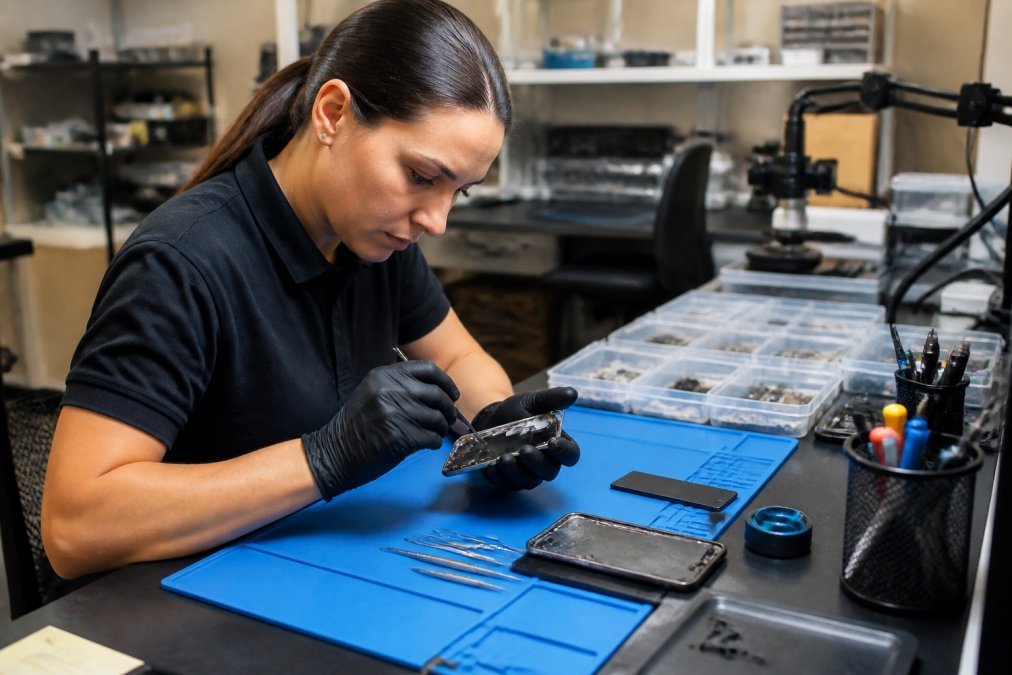
Turnaround time varies depending on the repair type, the shop’s workload, and parts availability.
Simple repairs like screen replacement or battery swap typically take 1-4 hours at shops with parts in stock (peer-reviewed research). If the shop needs to order parts, add 1-3 days. Many shops can complete these repairs same-day if you arrive early and they’re not backlogged.
Liquid damage repairs take longer because the device must be completely disassembled, dried, and cleaned. These repairs typically take 2-5 business days depending on damage severity.
Motherboard-level repairs and microsoldering work require the most time, typically ranging from 3-7 business days. Complex diagnostics alone can take a full day before repair work begins.
Parts availability affects timelines significantly. Shops stocking common parts deliver faster service. Specialized components may require ordering, extending turnaround to 1-2 weeks.
Normal Gadgets completes many repairs in 2-48 hours, with turnaround determined by repair complexity, parts availability, and current workload. Asking a shop upfront about realistic timelines for your specific repair prevents disappointment.
DIY Repair vs. Professional Service
The DIY repair option appeals to cost-conscious consumers and tech enthusiasts. Understanding when DIY makes sense and when it creates more problems helps you make the right choice.
When DIY Repair Makes Sense
DIY repair works best for simple replacements where parts are modular and clearly accessible. Battery replacement on devices designed for user replacement is straightforward. Screen replacement on some devices is manageable if you have steady hands and patience.
The advantage of DIY is cost savings on labor. You pay only for parts, not technician time. For a battery costing $30-60, avoiding a $50-100 labor charge is meaningful savings.
DIY also makes sense if you’re willing to accept the risk of failure and have time to learn. Online repair guides from sources like iFixit provide detailed instructions with photos. For devices you no longer plan to keep, DIY repair can be worth attempting since the cost of failure is minimal.
Common Mistakes That Worsen Damage
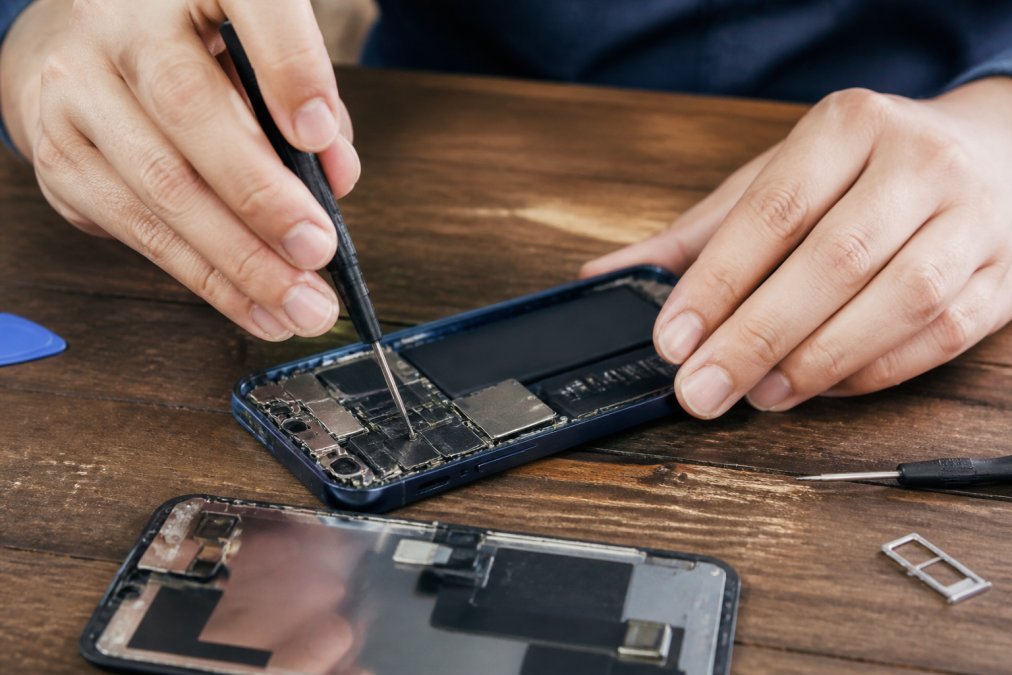
The most frequent DIY mistake is applying excessive force when opening the device. Modern phones are sealed with adhesive and carefully engineered tolerances. Prying too hard cracks the frame, damages ribbon cables, or breaks internal components.
Disconnecting ribbon cables incorrectly is another common error. These delicate connectors are easy to damage if you don’t understand the locking mechanism. A bent or broken ribbon cable can disable entire functions.
Using the wrong tools causes damage that’s expensive to fix. Screwdrivers that don’t fit properly strip screw heads. Attempting repair with improvised tools almost always causes damage beyond the original problem.
Electrostatic discharge (ESD) damage is invisible but real. If you don’t ground yourself before handling circuit boards, static electricity can damage sensitive chips. The device might appear to work initially, then fail days or weeks later.
Reassembly mistakes create problems that are hard to diagnose later. Forgetting to reconnect a ribbon cable, installing a component backward, or leaving a screw loose can cause intermittent failures or complete device failure.
Liquid damage repair is particularly risky for DIY attempts. Water-damaged devices require complete disassembly, component-level cleaning, and corrosion assessment. The specialized equipment and expertise required make this a professional-only repair.
Environmental and Economic Impact of Repair vs. Replacement
The choice between repair and replacement has real consequences beyond your wallet. Device manufacturing consumes significant resources, and e-waste represents a growing environmental problem.
Manufacturing a new smartphone requires extraction of rare earth minerals, energy-intensive processing, and complex supply chains (the EPA). Repairing and extending device life directly reduces demand for new manufacturing and its environmental cost.
E-waste contains toxic materials including lead, mercury, and cadmium. When devices end up in landfills instead of being properly recycled, these toxins leach into soil and groundwater. Extending device life through repair reduces e-waste volume.
Economically, repair is almost always cheaper than replacement. A screen repair costing $200-300 is far less than purchasing a new device costing $800-1200. For budget-conscious consumers and families, repair extends device life by years, deferring replacement purchases.
For organizations managing large device inventories, repair programs dramatically reduce capital costs. Maintaining devices through professional repair services costs a fraction of replacing entire fleets.
Conclusion
Alternatives to manufacturer smartphone repair services offer faster turnaround, lower costs, and often better service than official channels. Third-party certified providers, independent repair shops, and DIY options each solve different problems depending on your device, budget, and technical comfort level.
Choosing the right repair path requires understanding the trade-offs. Certified third-party providers deliver professional quality with faster service and transparent pricing. DIY repair saves money but requires technical skill and carries real risk of causing additional damage. Manufacturer repair guarantees official parts and procedures but costs more and takes longer.
The decision ultimately hinges on three factors: how quickly you need your device back, how much you’re willing to spend, and how much risk you’re comfortable accepting. For most users, a certified independent repair provider represents the best balance of quality, speed, and value.
Normal Gadgets combines WISE certification, Apple and Samsung Independent Repair Provider status, and over 125,000 completed repairs with a commitment to fast turnaround and strict privacy standards. Whether you need a simple screen replacement or advanced motherboard repair, professional service protects your device and respects your time.
Frequently Asked Questions
Q: Do third-party repairs void my smartphone warranty?
A: Not necessarily. The Magnuson-Moss Warranty Act prevents manufacturers from automatically voiding warranties simply because you used a third-party repair service. However, if the damage was caused by the third-party repair, the manufacturer may deny coverage for that specific issue. Independent repair providers certified by manufacturers (like Samsung Independent Service Providers or Apple Independent Service Providers) typically maintain warranty coverage. Always ask the repair shop about warranty implications before service begins.
Q: How do I verify the quality of a smartphone repair provider?
A: Look for certifications like WISE (Wireless Industry Service Excellence), manufacturer authorizations, and Level I-III Advanced Mobile Device Certifications. Check online reviews and ask how long they've been in business. Request information about their diagnostic process—reputable shops offer free diagnostics to identify issues before quoting repair costs. Ask whether they use OEM (original equipment manufacturer) components or aftermarket parts, and what warranty they provide on repairs completed.
Q: What determines smartphone repair turnaround time?
A: Turnaround time depends on repair complexity, parts availability, and shop workload. Simple repairs like screen replacements may take 2-4 hours, while battery replacements or water damage diagnostics might require 24-48 hours. Advanced repairs like motherboard microsoldering can take several days. Ask the repair shop for a specific timeframe during your diagnostic consultation. Some providers offer expedited service for an additional fee if your situation requires faster turnaround.
Q: Are independent repair shops more cost-effective than manufacturer services?
A: Often yes, but pricing varies by location, repair type, and parts quality. Independent repair shops typically have lower overhead costs than authorized manufacturer service centers, which can translate to lower labor rates. However, some complex repairs may cost similarly regardless of provider. Request quotes from multiple providers before deciding. Compare not just price but also warranty coverage, parts quality, and technician certifications to ensure you're getting true value.