Table of Contents
- What Professional Device Diagnostic Services Actually Cover
- Early Detection: How Diagnostics Prevent Bigger Repairs
- DIY vs Professional Device Repair Risks: What You Stand to Lose
- How Long Does a Phone Diagnostic Take at a Professional Shop
- Cost of Electronics Diagnostic Service vs Replacement
- Data Privacy and Security During Device Diagnostic Services
- Who Benefits Most from Professional Diagnostics
- Conclusion
Last Updated: August 28, 2026
What Professional Device Diagnostic Services Actually Cover
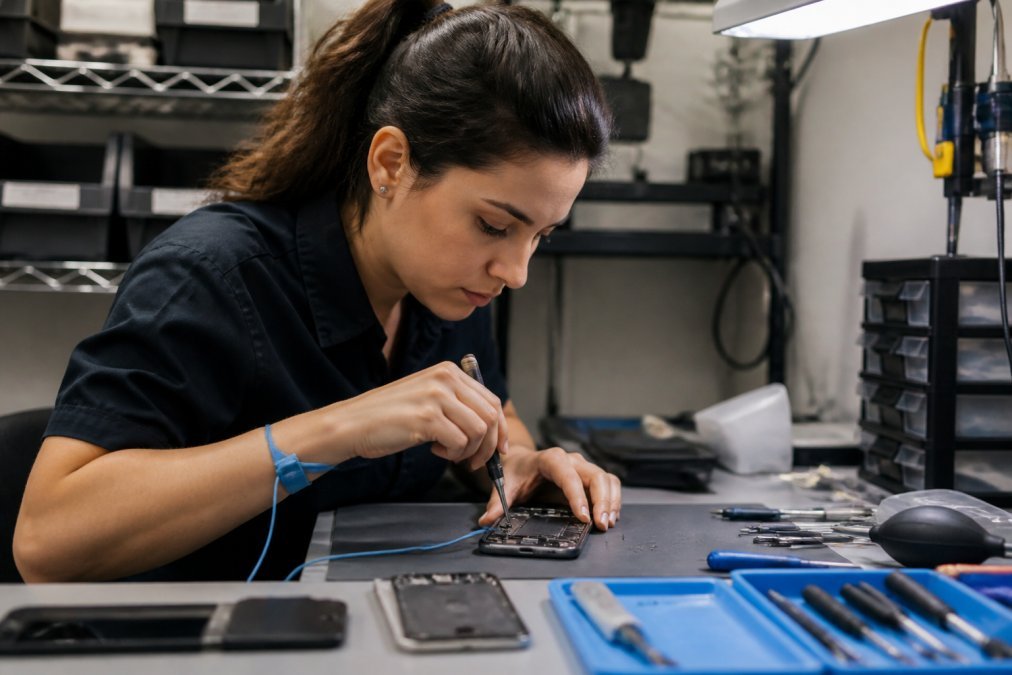
Device diagnostic services are a systematic evaluation process in which certified technicians use specialized tools and software to identify hardware failures, software conflicts, and hidden damage inside your device before any repair work begins. A thorough diagnostic goes far beyond a visual inspection, it tests battery health, charging circuitry, display output, data integrity, connectivity modules, and component-level functionality.
At Normal Gadgets, we’ve completed more than 125,000 device repairs since 2012, and the pattern is consistent: the customers who skip the diagnostic step almost always end up paying more in the long run. A cracked screen is obvious. A failing battery controller or a corroded charging port connector is not, and missing those issues means the real problem goes unaddressed.
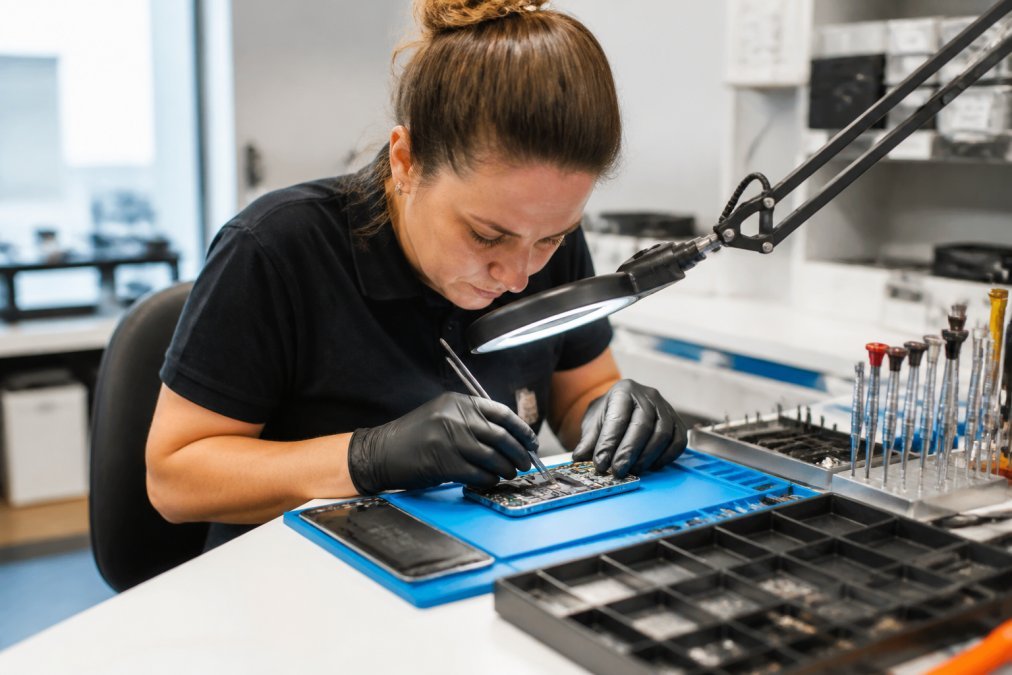
Professional diagnostics typically cover:
- Hardware testing: Battery capacity and charge cycle count, display calibration, speaker and microphone output, camera sensor performance
- Connectivity checks: Wi-Fi, Bluetooth, cellular signal, and NFC module integrity
- Charging and power systems: Port condition, charging IC, and power rail continuity
- Data and storage health: Read/write speeds, error rates, and storage integrity
- Thermal and performance testing: Processor load behavior and thermal management under stress
The distinction between a free visual diagnostic and a deeper functional diagnostic matters. A visual check tells you what’s broken on the surface. A functional diagnostic tells you what’s about to fail, and that information is where the real value lives.
Early Detection: How Diagnostics Prevent Bigger Repairs
The biggest mistake most device owners make is waiting until something stops working entirely before bringing a device in. Professional device diagnostic services catch problems in their early stages, when repairs are faster, cheaper, and far less disruptive.
A failing battery, for example, often shows degraded capacity and elevated internal resistance long before it starts swelling or causing sudden shutdowns. A diagnostic catches this at the 70-80% health threshold, when a simple battery replacement solves the problem. Wait until the battery is physically swollen, and you’re now dealing with potential display damage, case deformation, and a significantly more involved repair.
According to the Consumer Technology Association’s device repair and sustainability research, extending device lifespan through proactive maintenance is one of the most effective ways to reduce electronic waste and total cost of ownership. Early intervention is the mechanism that makes that possible.
Hidden Water Damage and Internal Failures
Water damage is the clearest example of why early diagnostic services matter. A device that survives a drop in water may function normally for days or even weeks before corrosion spreads to critical components. By the time symptoms appear, erratic behavior, charging failures, display artifacts, the damage has often reached the logic board.
Liquid damage indicators and corrosion patterns are detectable under magnification long before functional failure occurs. Technicians trained in board-level diagnostics can identify which components have been exposed, clean affected areas, and treat corrosion before it propagates. The repair window for water damage is genuinely time-sensitive. Acting within 24 to 48 hours of exposure dramatically improves outcomes compared to waiting a week.
This is also where the depth of a shop’s diagnostic capability separates basic repair providers from genuine specialists. Normal Gadgets is the only local repair shop offering advanced motherboard and microsoldering services, which means hidden failures that other shops would classify as “unrepairable” are often recoverable here.
DIY vs Professional Device Repair Risks: What You Stand to Lose
Most people who attempt DIY repairs do so for two reasons: they want to save money, and they’re confident the fix looks straightforward. Both assumptions tend to collapse quickly once the device is open.
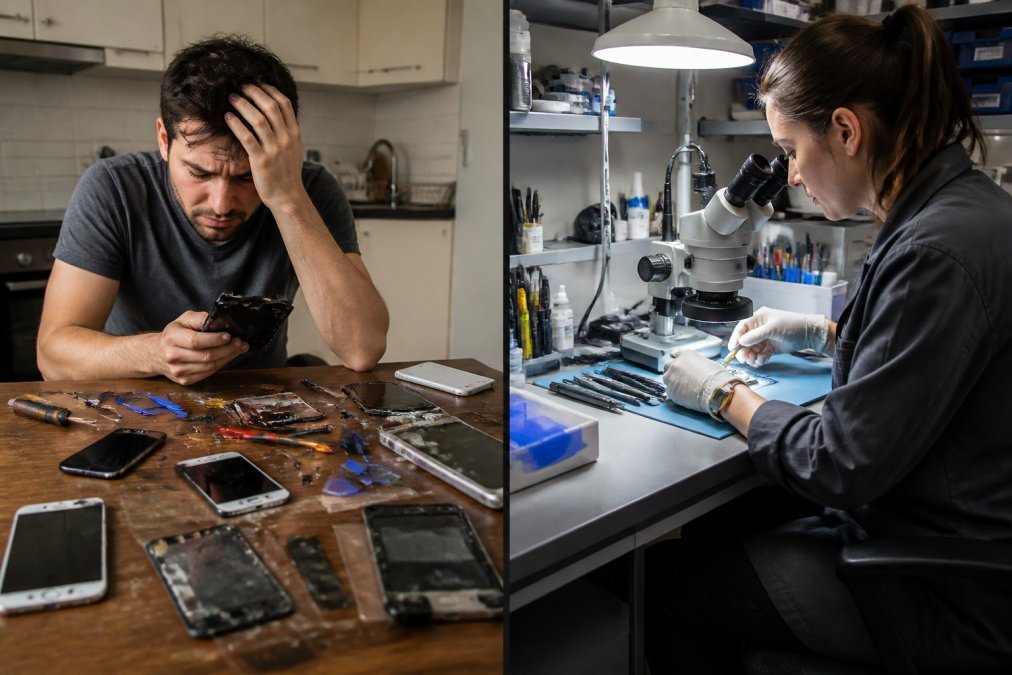
The risks of DIY device repair go well beyond the obvious. Here’s what’s actually at stake:
- Voided warranties and service agreements: Opening a device without authorization typically voids any remaining manufacturer warranty or AppleCare coverage.
- Electrostatic discharge damage: Handling internal components without proper ESD protection can destroy sensitive ICs that were previously functional.
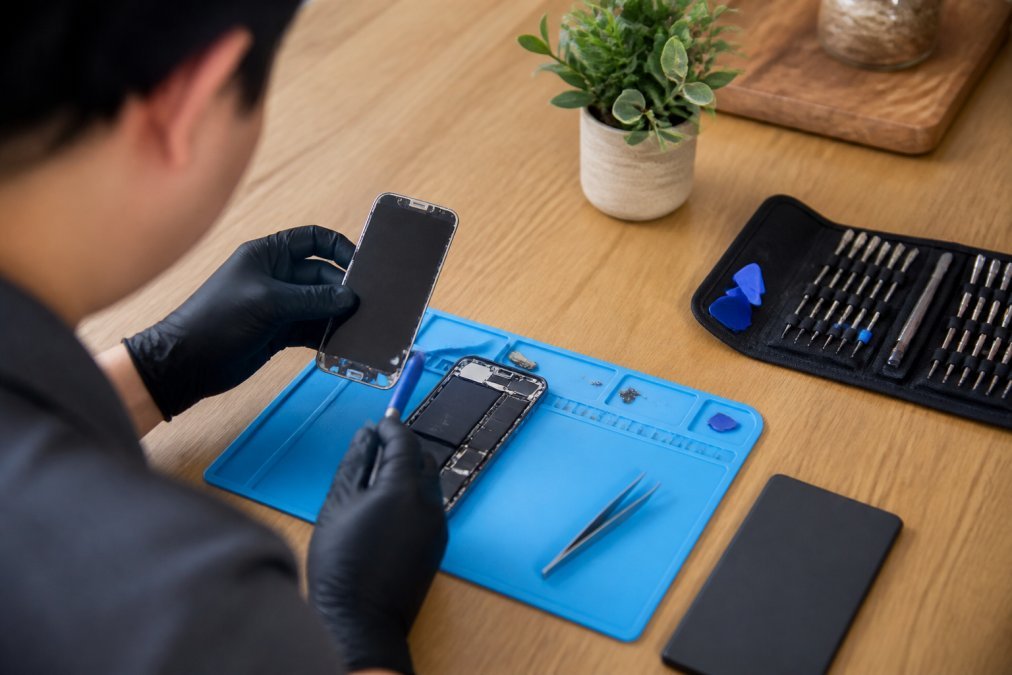
- Incorrect reassembly: Flex cables, adhesive seals, and retention brackets are easy to misroute or overtighten, creating new failures where none existed.
- Data loss: Improper handling of storage components, or a failed repair that bricks the device, can make data recovery significantly harder or impossible.
- Secondary damage escalation: A DIY screen replacement that goes wrong can damage the display connector, the front camera bracket, or the face ID sensor array, turning a $120 repair into a $400 one.
According to iFixit’s repair difficulty and component sensitivity documentation, modern smartphones use increasingly fragile flex cable assemblies and adhesive-bonded components that require calibrated heat and precision tools to separate safely. The gap between “looks doable on a tutorial video” and “is actually safe to attempt” has widened considerably with current device generations.
A common mistake is underestimating the cost of getting it wrong. The repair you save money on today can easily become the device replacement you’re forced into next week.
How Long Does a Phone Diagnostic Take at a Professional Shop
A standard phone diagnostic takes between 30 minutes and two hours at a professional repair shop, depending on the device model and the scope of issues being evaluated.
Simple diagnostics, battery health checks, screen responsiveness testing, charging port inspection, typically complete in under an hour. More involved evaluations, such as board-level continuity testing after liquid exposure or logic board fault isolation, require more time and may extend to a half-day assessment.
At Normal Gadgets, many repairs are completed within 2 to 48 hours, and the diagnostic phase is built into that timeline. The free visual diagnostic happens at intake and gives you a baseline assessment immediately. If deeper functional testing is warranted, technicians communicate that clearly before proceeding.
Diagnostic Type | Typical Duration | What It Covers |
|---|---|---|
Free visual diagnostic | 10-20 minutes | Physical damage, port condition, screen integrity |
Standard functional diagnostic | 30-60 minutes | Battery health, connectivity, software state |
Advanced board-level diagnostic | 1-4 hours | Component-level fault isolation, liquid damage mapping |
Bulk device diagnostic (fleet) | By arrangement | Multi-device triage for schools or organizations |
One thing nobody tells you upfront: turnaround time is heavily influenced by parts availability, not just labor. If a technician identifies the problem in 30 minutes but the replacement component requires sourcing, that’s where the timeline extends. Shops with strong parts inventory close that gap considerably.
Cost of Electronics Diagnostic Service vs Replacement
The cost of a professional electronics diagnostic service is almost always a fraction of device replacement cost, and the diagnostic itself determines whether repair is even the right call.
Replacement costs for current flagship smartphones routinely exceed several hundred dollars, and for laptops, the gap between repair and replacement is even wider. A diagnostic that confirms a device is repairable for a modest repair fee is a straightforward financial win. A diagnostic that reveals a device has reached end-of-life is equally valuable: it prevents you from spending money on a repair that won’t hold.
Book Consultation/Appointment →
The honest answer on pricing is that it depends on the device, the scope of damage, and the parts required. Normal Gadgets offers a free visual diagnostic as the starting point, with no obligation to proceed if the repair estimate doesn’t make sense for your situation. You can walk away with the information and make your own decision.
For context on what drives repair versus replacement decisions, the EPA’s Sustainable Materials Management program on electronics reuse and repair notes that repair and refurbishment consistently produce lower environmental and cost impact than replacement when the device has recoverable functionality. That guidance aligns with what we see in practice: most devices brought in for professional diagnostics are repairable.
Data Privacy and Security During Device Diagnostic Services
Handing your phone or laptop to a repair technician is an act of trust. Your device contains messages, financial accounts, work credentials, health data, and personal files. The question of what happens to that data during a repair is one that most shops don’t address clearly enough.
Professional device diagnostic services should operate under a defined privacy policy that limits technician access to only what is necessary for the repair. At Normal Gadgets, a strict privacy policy ensures no unauthorized access to personal information, technicians are not permitted to access, copy, or transmit customer data during the repair process.
This matters especially for business and organizational customers. Healthcare organizations, government agencies, and school districts handle data subject to federal privacy requirements, including HIPAA for healthcare and FERPA for student records. A repair provider that handles devices for these organizations needs to demonstrate not just technical competence but documented data handling protocols.
What responsible data handling during device diagnostic services looks like in practice:
- Technicians work within the device’s existing lock state where possible
- No screenshots, data transfers, or cloud syncing initiated during repair
- Devices stored securely when not actively being worked on
- Clear policy on what happens to devices that are abandoned or unclaimed
The FTC guidance on data security practices for service providers establishes that businesses handling consumer devices have an obligation to implement reasonable safeguards for the personal data those devices contain. Choosing a certified, established repair provider is the most practical way to ensure those safeguards are in place.
Who Benefits Most from Professional Diagnostics
Professional device diagnostic services deliver the clearest return for users whose devices are either high-value, high-dependency, or part of a managed fleet. The individual consumer with a cracked screen benefits, but the benefit compounds significantly at scale.
Individual professionals who rely on a smartphone for client communication, scheduling, and payment processing face real economic consequences when that device is unavailable. A same-day or next-day diagnostic and repair eliminates that downtime. Parents managing children’s devices, tablets for school, gaming consoles, laptops for homework, benefit from knowing exactly what’s wrong and what it will cost before committing to a repair.
School Districts and Bulk Device Programs
School districts managing large inventories of student devices face a specific challenge: devices fail at unpredictable rates, repairs need to be consistent and documented, and turnaround time affects learning continuity. A professional repair partner with bulk diagnostic capability handles this systematically rather than device-by-device.
Normal Gadgets works with school districts on exactly this kind of program. Our team can manage large-volume diagnostic and repair projects while maintaining consistent quality, secure device handling, and dependable turnaround times. For an IT director managing 200 or more devices, that operational reliability is the differentiator, not just whether a single repair can be completed, but whether the entire program can be sustained without disruption.
Healthcare, Government and Retail Organizations
Healthcare systems and government agencies operate under stricter device handling requirements than most organizations. Devices may contain protected health information, access credentials for secure systems, or sensitive operational data. The repair provider needs to demonstrate not just technical competence but verifiable data handling protocols and, where relevant, appropriate certifications.
Normal Gadgets serves healthcare organizations, government agencies, and other institutional clients through structured business-to-business programs. Our WISE Certified technicians meet nationally recognized standards for wireless device repair, and our protocols for secure device handling are designed for clients where data security is non-negotiable.
For these organizations, the benefits of professional device diagnostic services extend beyond individual device health. Systematic diagnostics across a device fleet identify failure patterns, inform procurement decisions, and reduce unplanned downtime across the organization.
Device failures rarely announce themselves in advance, they accumulate quietly until something breaks at the worst possible moment. The real value of professional device diagnostic services is the information they provide before that moment arrives. Normal Gadgets offers a free visual diagnostic as the starting point, backed by Level I, II, and III certified technicians and more than a decade of repair experience across smartphones, laptops, gaming systems, and organizational device fleets. Book an appointment with Normal Gadgets and get a clear, honest assessment of your device’s condition, no obligation, no guesswork.
Frequently Asked Questions
What is included in a professional device diagnostic service?
A professional diagnostic service checks for both visible and internal damage: cracked components, water intrusion, battery health, software errors, and hardware failures that aren't obvious from the outside. At shops like Normal Gadgets, a free visual diagnostic is the starting point, and technicians may run deeper tests to identify issues like failing capacitors or corrupted firmware. You receive a clear explanation of what's wrong and what repair options are available before any work begins.
How long does a professional device diagnostic usually take?
A basic visual diagnostic typically takes 15 to 30 minutes. More thorough assessments that check software, battery cycles, and internal components can run one to two hours depending on the device and the complexity of the problem. Normal Gadgets completes many repairs within 2 to 48 hours of diagnosis, so the diagnostic rarely adds significant delay. Turnaround depends on parts availability and the specific repair required.
Is it worth paying for a diagnostic if the device is old?
Yes, in most cases. A diagnostic tells you the actual repair cost before you commit, which lets you compare that figure against the cost of a replacement. Older devices often have straightforward, affordable fixes — a battery swap or charging port repair — that extend useful life by one to two years. Without a diagnostic, you're guessing. Knowing the real problem lets you make an informed financial decision rather than defaulting to a replacement you may not need.
Why is it better to get a professional diagnostic than a DIY fix?
DIY repairs carry real risks: voided warranties, damaged ribbon cables, stripped screws, and accidental data loss. Certified technicians use calibrated tools and follow standardized procedures that preserve device integrity. Professional diagnostics also catch secondary issues a DIY attempt would miss entirely — like water damage spreading to a motherboard. For devices containing sensitive personal or work data, professional handling with a clear privacy policy adds a layer of protection that no YouTube tutorial can match.